Test day nerves are normal, even for people who’ve handled a forklift before. Knowing exactly what happens on the day – and what examiners are actually looking for – is the easiest way to walk in confident instead of anxious.
What Forklift Test Day Actually Involves
A forklift test typically has two parts: a short theory or knowledge check, and a practical assessment on the truck itself. Both need to be passed to gain your certificate.
Theory element – covers basic safety knowledge: pre-use checks, load capacity awareness, site safety rules, and understanding of controls. This is usually verbal or a short written check, not a formal exam.
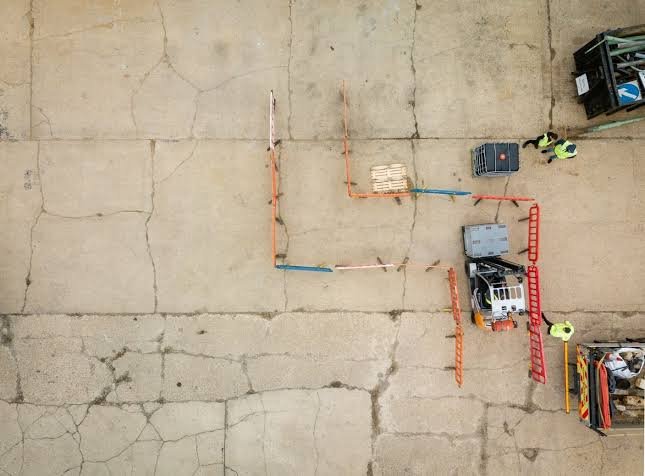
Practical element – you’ll be asked to complete a series of manoeuvres: stacking and de-stacking loads, travelling with a raised load, cornering, reversing, and precise positioning. The examiner is watching control, awareness, and safe habits throughout, not just whether you complete each task.
What Examiners Are Actually Looking For
- Pre-use checks done properly, not rushed or skipped
- Smooth, controlled movements rather than fast or jerky handling
- Correct mast and fork positioning when travelling, especially with a raised load
- Consistent mirror and surroundings awareness, particularly at blind corners
- Safe stacking and de-stacking technique, including correct approach angle
- Calm response under instruction, showing you can follow directions accurately mid-task
Most candidates who don’t pass first time aren’t failed for one dramatic mistake – it’s usually a pattern of small habits: rushing checks, poor mirror use, or losing control of load height while travelling.
Common Reasons People Don’t Pass First Time
- Rushing the pre-use inspection to save time, which examiners notice immediately
- Travelling with forks too high, a common habit that reduces stability and visibility
- Poor observation at corners and junctions, especially not checking mirrors consistently
- Overcorrecting under pressure, making jerky adjustments instead of steady ones
- Not asking for clarification when an instruction is unclear, and guessing instead
How to Prepare in the Days Before
- Practise the core manoeuvres repeatedly, not just once – muscle memory matters more than theory recall
- Get a full night’s sleep before test day; fatigue affects reaction time and concentration
- Review your course notes on pre-use checks the night before, since this is often underestimated
- Ask your instructor for honest feedback during training on your weakest manoeuvre and drill it specifically
- Wear appropriate clothing and footwear – steel-toe boots and no loose clothing that could catch on controls
What Happens If You Don’t Pass
Not passing first time isn’t unusual and doesn’t mean starting from zero. Most training providers offer a retest, often at a reduced cost, focused specifically on the areas that need improvement rather than repeating the full course. If you’re already booked with Result’s Counterbalance Forklift Training or Reach Truck Training Course, ask your instructor about retest options before test day so you know what to expect either way.
After You Pass
Once you’ve passed, your certificate is only the starting point. For guidance on what to do next – from getting your card issued to applying for roles – see What Happens After You Pass Your Forklift Test?
Booked Onto Your Test? Get Test-Ready
Result Forklift Training runs courses across Peterborough and the surrounding region, with instructors who give direct, honest feedback throughout training so there are no surprises on test day.
Book your course or check our FAQ for common test-day questions.