Peterborough is one of the UK’s busiest logistics and distribution hubs, with major employers like Amazon, Perkins Engines, and countless warehouses operating across the city. If you’re looking to break into the sector or boost your earning potential, a forklift licence is one of the most practical qualifications you can get — and there’s no shortage of local training to help you do it.
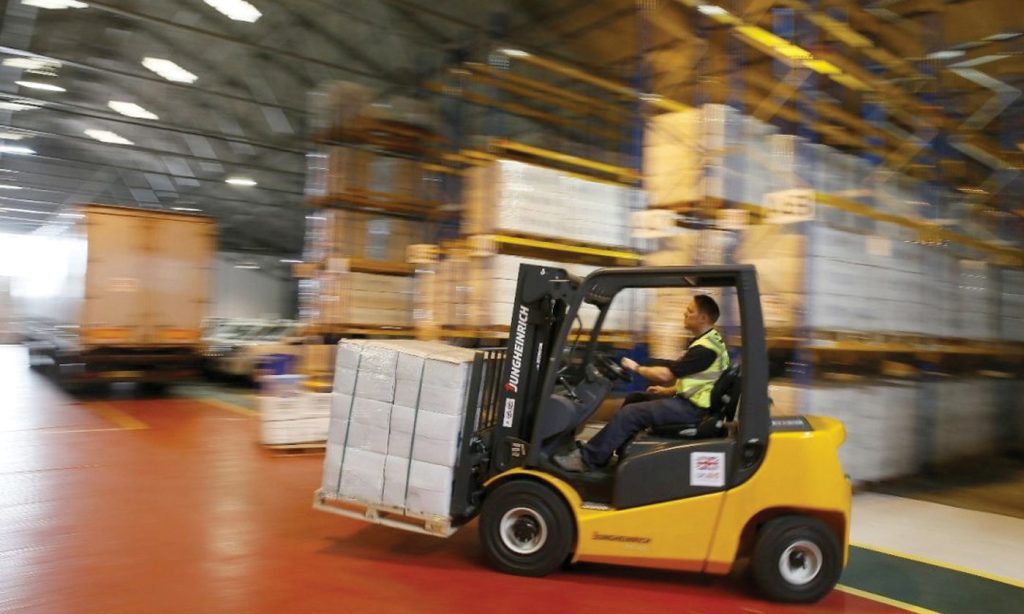
Do You Need a Licence to Drive a Forklift?
Technically, there’s no government-issued forklift licence in the UK. However, the Health & Safety Executive (HSE) makes it clear that operators must be adequately trained, and employers and insurers will expect you to hold a recognised operator card from an accredited body — most commonly RTITB or ITSSAR. Without one, you simply won’t be hired.
Types of Forklift Training Available
Your certification covers a specific type of truck, so it’s worth knowing which one you need before you book. The most common courses in Peterborough include:
- Counterbalance Forklift (CBT) — the most widely used type and the best starting point for most people
- Reach Truck — common in racked warehouses and large distribution centres
- Powered Pallet Truck — an entry-level option, often combined with other training
- Telehandler — used in construction and agricultural settings
- Order Picker — for high-bay warehouse environments
- VNA (Very Narrow Aisle) — specialist training for high-density storage facilities
Most people start with the counterbalance, as it’s the most transferable and widely requested by local employers.
What Happens During Training?
A standard novice course runs over 3 to 5 days and typically follows this structure:
Day 1 — Theory & Safety You’ll cover the legal framework, pre-use inspection routines, load stability, and workplace hazards. Expect a written or multiple-choice test by the end of this stage.
Days 2–3 — Basic Practical Skills You’ll get on the truck in a controlled environment, learning how to pick up, travel with, and set down loads safely. Instructors will guide your technique throughout.
Days 4–5 — Advanced Manoeuvres & Racking You’ll progress to working with racking systems, confined spaces, and more complex load handling — replicating real warehouse conditions as closely as possible.
Final Day — Formal Assessment An independent assessor from RTITB, ITSSAR, or AITT will evaluate both your theory knowledge and practical ability. Pass this, and you’ll receive your operator licence card.
How Much Does It Cost?
Prices vary by provider and truck type, but as a rough guide for the Peterborough area:
- Full novice course: £500–£800 (including assessment)
- Refresher or conversion course: £200–£400
- Powered pallet truck: from around £150–£250
It’s worth checking with local employers before you pay out of pocket — many logistics companies in Peterborough will fund your training in exchange for a short-term employment commitment.
Entry Requirements
Forklift training is open to most adults. You’ll generally need to:
- Be at least 16 years old (18+ for most commercial roles)
- Have a basic level of literacy and numeracy
- Bring photo ID on the day
- Wear steel-toecap boots and comfortable clothing
- Disclose any medical conditions that could affect your ability to operate safely
No formal qualifications are needed. It’s entirely skills-based.
Tips for Passing First Time
- Don’t rush on the practical — assessors reward smooth, controlled movements over speed
- Take the theory seriously — load stability and pre-use checks are tested and often caught people out
- Keep your observations visible — exaggerate head checks and mirror checks so assessors can clearly see you’re doing them
- Ask questions during training, not during the assessment
Where to Train in Peterborough
Look for centres that are RTITB or ITSSAR accredited — these are the gold standard recognised by employers across the UK. Several training providers operate in and around Peterborough, offering both scheduled and one-to-one courses depending on your availability.
Final Thoughts
Getting your forklift licence in Peterborough is a straightforward process that can genuinely change your employment prospects. The training is practical, the certification is fast, and the job market here is strong. Whether you’re just starting out or converting to a new truck type, a few days of training could be the best investment you make this year.