Forklifts are essential workhorses in warehouses, construction sites, and manufacturing facilities worldwide. However, these powerful machines can also be dangerous when not operated properly. According to OSHA, forklift accidents cause approximately 85 fatalities and 34,900 serious injuries annually in the United States alone. The good news? Most of these incidents are preventable through proper forklift training and adherence to safety best practices.
Whether you’re a seasoned operator or new to forklift operations, understanding and implementing these critical safety practices can save lives, prevent injuries, and protect your workplace from costly accidents and downtime.
Pre-Operation Inspection: Your First Line of Defense
Never skip the pre-operation inspection. This crucial step should be performed at the beginning of every shift and takes only a few minutes but can prevent serious accidents.
Essential inspection checklist:
- Tires and wheels: Check for wear, damage, and proper inflation
- Hydraulic systems: Look for leaks, damaged hoses, or low fluid levels
- Brakes: Test both service and parking brakes for proper function
- Steering: Ensure smooth operation without excessive play
- Lights and horn: Verify all warning devices work properly
- Forks and mast: Inspect for cracks, bends, or excessive wear
- Seatbelt: Confirm it’s present and functional
- Overhead guard: Check for damage or structural issues
Document any defects immediately and remove the forklift from service until repairs are completed. Operating damaged equipment puts everyone at risk and violates OSHA regulations.
Operating Best Practices: Stay Safe on the Move
Proper operating technique separates professional operators from accident-prone ones. These fundamental practices should become second nature:
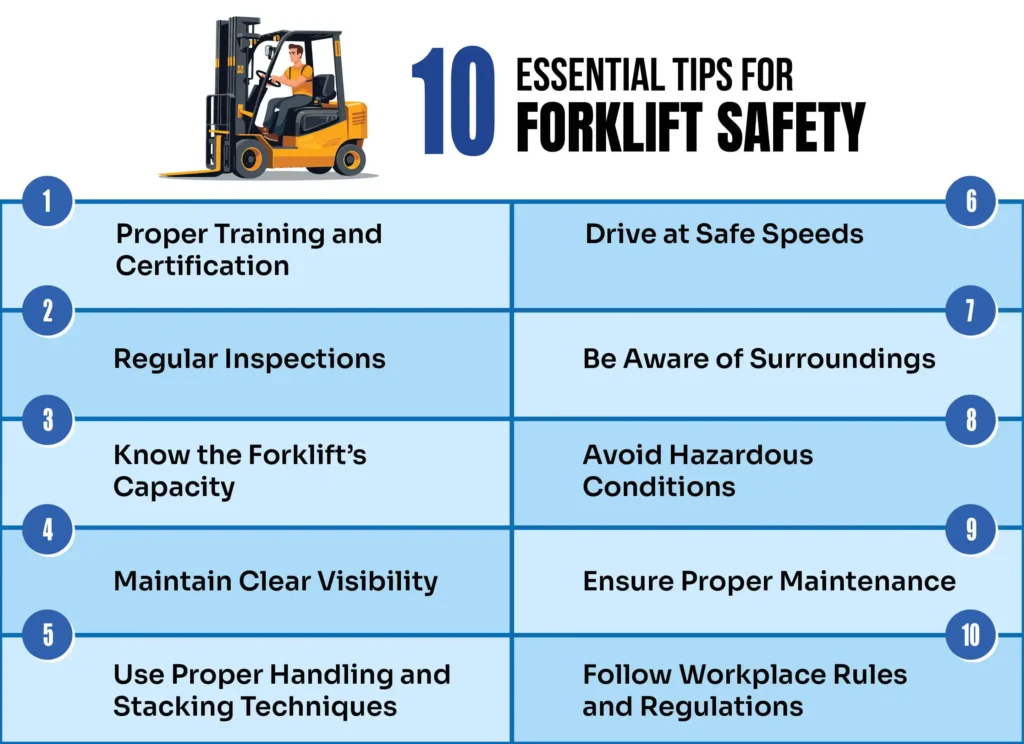
Speed and control: Never exceed safe operating speeds, especially around corners, pedestrians, or uneven surfaces. The forklift’s stability decreases significantly at higher speeds. Always slow down at intersections, doorways, and blind spots. Remember: it’s not a race.
Visibility matters: Always travel with the load low to the ground (4-6 inches) and tilted back slightly for stability. When carrying loads that obstruct your view, drive in reverse. Use spotters when visibility is compromised, and never assume others see you coming.
Load capacity: Respect the forklift’s rated capacity, which is displayed on the data plate. Overloading is a leading cause of tip-overs. Consider the load center, moving the load farther from the mast reduces effective capacity. When in doubt, use a larger forklift or make multiple trips.
Three-point contact: Always maintain three points of contact when mounting or dismounting the forklift. Never jump off, even in emergencies. Use handholds and steps as designed.
Loading and Unloading: Handle with Care
Improper loading techniques cause countless accidents. Follow these guidelines to keep loads secure and stable:
Approach loads squarely with the mast vertical. Insert forks completely under the load, ensuring even weight distribution. Never lift loads with just one fork or tip of the forks, this creates dangerous instability.
Center the load on the forks and carriage. An off-center load can shift unexpectedly and cause the forklift to tip. After picking up a load, tilt the mast backward before traveling.
Stack safely by placing heavier items on the bottom and ensuring loads are stable before moving. Never walk or stand under elevated loads, and keep bystanders at a safe distance during loading operations.
When setting loads down, lower slowly and ensure the surface is stable and level. Never drop loads, as this can damage products and create hazardous situations.
Workplace Awareness: Your 360-Degree Responsibility
Situational awareness separates safe operators from those involved in accidents. Treat every shift like your first day, stay alert and never become complacent.
Pedestrian safety: Pedestrians always have the right of way. Make eye contact, use your horn at intersections, and maintain safe distances. Establish designated pedestrian walkways and respect them. In high-traffic areas, consider implementing forklift-free zones during peak pedestrian activity.
Surface conditions: Watch for wet floors, oil spills, debris, uneven surfaces, and dock plates. These hazards dramatically affect forklift stability and braking. Report hazardous conditions immediately and avoid them when possible.
Blind spots and intersections: Slow down and sound your horn at every intersection, doorway, and blind corner. Use mirrors effectively and install convex mirrors at blind corners. Never assume the path is clear, verify it.
Ramps and inclines: Drive loaded forklifts forward when going up ramps and backward when going down. Unloaded forklifts should travel in reverse uphill and forward downhill. This keeps the load on the uphill side, maintaining stability.
Fueling and Charging: Handle Energy Sources Safely
Whether your forklift runs on propane, diesel, or batteries, proper fueling/charging procedures are essential:
Propane forklifts: Only change propane tanks in well-ventilated areas away from ignition sources. Always turn off the forklift engine before changing tanks. Wear proper PPT including gloves and safety glasses. Never smoke near propane tanks.
Electric forklifts: Only charge batteries in designated charging areas with proper ventilation. Follow manufacturer guidelines for charging times and procedures. Check water levels in battery cells regularly and use distilled water only. Always wear PPE when handling batteries due to sulfuric acid risks.
Refueling procedures: Turn off the engine and allow it to cool before refueling. Never smoke or use open flames near fuel. Clean up any spills immediately and report them to supervisors.
Training and Certification: Invest in Safety
OSHA requires all forklift operators to be certified and receive refresher training at least every three years. However, safety-conscious organizations go beyond minimum requirements:
Comprehensive training should include classroom instruction, hands-on training, and workplace-specific evaluation. Operators should be trained on each forklift type they’ll operate, as different models have unique characteristics.
Refresher training is necessary after any accident, near-miss, observed unsafe operation, or when introducing new equipment or processes. Don’t wait for the three-year mark if skills need updating.
Encourage a safety culture where operators feel comfortable reporting hazards, near-misses, and safety concerns without fear of punishment. Regular safety meetings and toolbox talks keep safety top-of-mind.
Conclusion: Safety is Everyone’s Responsibility
Forklift safety isn’t just about following rules; it’s about protecting yourself, your coworkers, and your workplace. Every time you operate a forklift, you hold responsibility for the safety of everyone around you.
These best practices form the foundation of safe forklift operations, but they’re only effective when consistently applied. Make safety your priority on every shift, never cut corners, and remember: no job is so important that it can’t be done safely.
Stay alert, stay trained, and stay safe. Your life and the lives of your coworkers depend on it.