
Cold weather creates real operational challenges for businesses that rely on forklifts in yards, warehouses and construction sites. Whether you are operating diesel, LPG or electric models, low temperatures can affect performance, reduce efficiency and increase safety risks. Understanding these impacts helps businesses plan ahead and protect both equipment and operators.
1. Battery Performance Drops in Cold Conditions
For electric forklifts, batteries are the most vulnerable component in winter.
When temperatures fall:
- Battery capacity can drop by up to 30–50%
- Charging times increase
- Voltage output becomes inconsistent
- Battery fluid may thicken
Cold batteries simply cannot deliver the same power output as they do in moderate conditions. This results in slower acceleration, reduced lift capacity and shorter operating time between charges.
What you can do:
- Store forklifts indoors when possible
- Use battery blankets or thermal covers
- Allow batteries to warm up before heavy use
- Increase charging frequency in winter
2. Engine and Fuel Issues in Diesel and LPG Forklifts
For internal combustion forklifts, cold weather affects:
- Engine oil viscosity
- Fuel efficiency
- Starting performance
Diesel can begin to gel in very low temperatures, restricting fuel flow. Thicker oil also makes engines harder to start and increases wear during cold starts.
Preventative steps:
- Use winter-grade fuel
- Switch to lower viscosity oil approved by the manufacturer
- Warm engines before heavy operation
- Carry out regular cold-season servicing
3. Hydraulic Systems Slow Down
Hydraulic fluid thickens in cold weather, causing:
- Slower lift speeds
- Delayed mast movement
- Increased strain on pumps and seals
This can affect precision when handling loads and increase mechanical stress over time.
Solutions:
- Use winter-rated hydraulic fluids
- Allow machines to warm up before full operation
- Perform regular inspection of seals and hoses
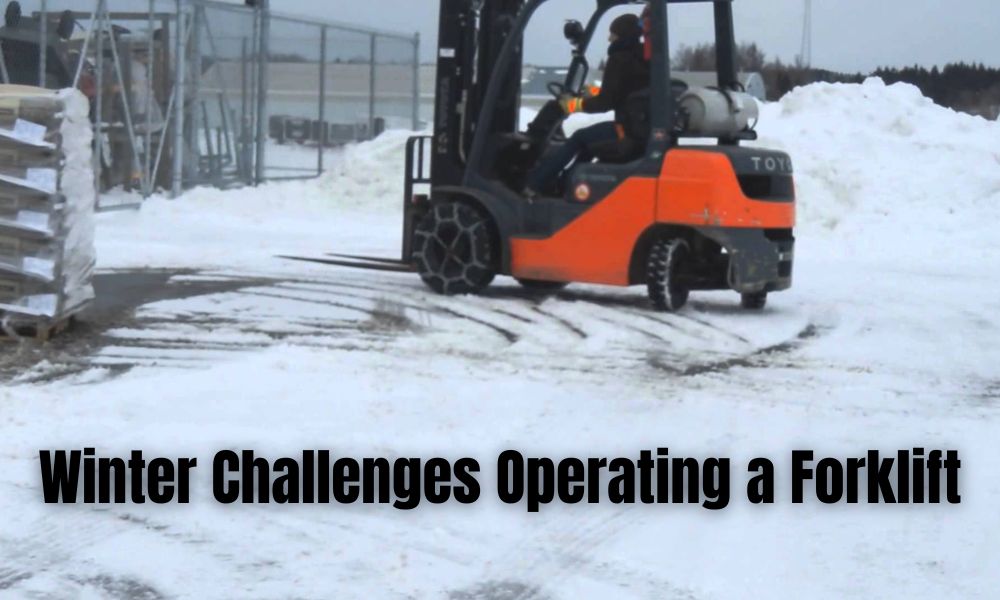
4. Tyre Traction and Surface Hazards
Cold weather increases the likelihood of:
- Ice formation
- Wet surfaces
- Reduced tyre grip
- Longer stopping distances
This dramatically raises the risk of skidding and collisions, especially in outdoor yards.
Safety recommendations:
- Fit appropriate winter tyres where necessary
- Reduce travel speeds
- Increase braking distances
- Clear ice and snow from work areas
5. Reduced Visibility and Operator Fatigue
Winter brings additional hazards such as:
- Fogged windscreens
- Condensation on mirrors
- Low daylight hours
- Cold-related fatigue
Operators wearing bulky winter clothing may also experience reduced mobility and slower reaction times.
Improve safety by:
- Ensuring proper lighting in yards and warehouses
- Installing heated cabins where possible
- Providing appropriate PPE
- Scheduling shorter shifts in extreme cold
6. Increased Mechanical Wear
Cold temperatures can make metal components more brittle. Combined with thickened fluids and harder starts, this can lead to:
- Increased component wear
- Higher maintenance costs
- Greater risk of breakdowns
Preventative maintenance becomes even more critical during winter months.
7. Winter Forklift Safety Checklist
To maintain safe and efficient operations:
- Conduct daily pre-shift inspections
- Check battery charge levels more frequently
- Inspect tyres and braking systems
- Monitor hydraulic performance
- Keep refuelling and charging areas dry and clear
- Train operators on winter-specific hazards
Final Thoughts
Cold weather significantly impacts forklift performance, efficiency and safety. From reduced battery capacity to traction hazards and mechanical strain, winter conditions demand proactive management.
With proper maintenance, operator training and seasonal preparation, businesses can maintain productivity while reducing the risk of accidents and costly downtime.
If your team operates forklifts in winter conditions, now is the time to review maintenance schedules and reinforce safety protocols before temperatures drop further.