If you’re looking to get your team forklift certified, one of the first decisions you’ll face is whether to bring the training to your workplace or send your operators to a dedicated training centre. Both options are fully valid and HSE-compliant, but the right choice depends on your business size, budget, schedule, and the type of environment your operators work in.
In this guide, we break down the key differences between on-site and off-site forklift training to help you make the best decision for your team.
What Is On-Site Forklift Training?
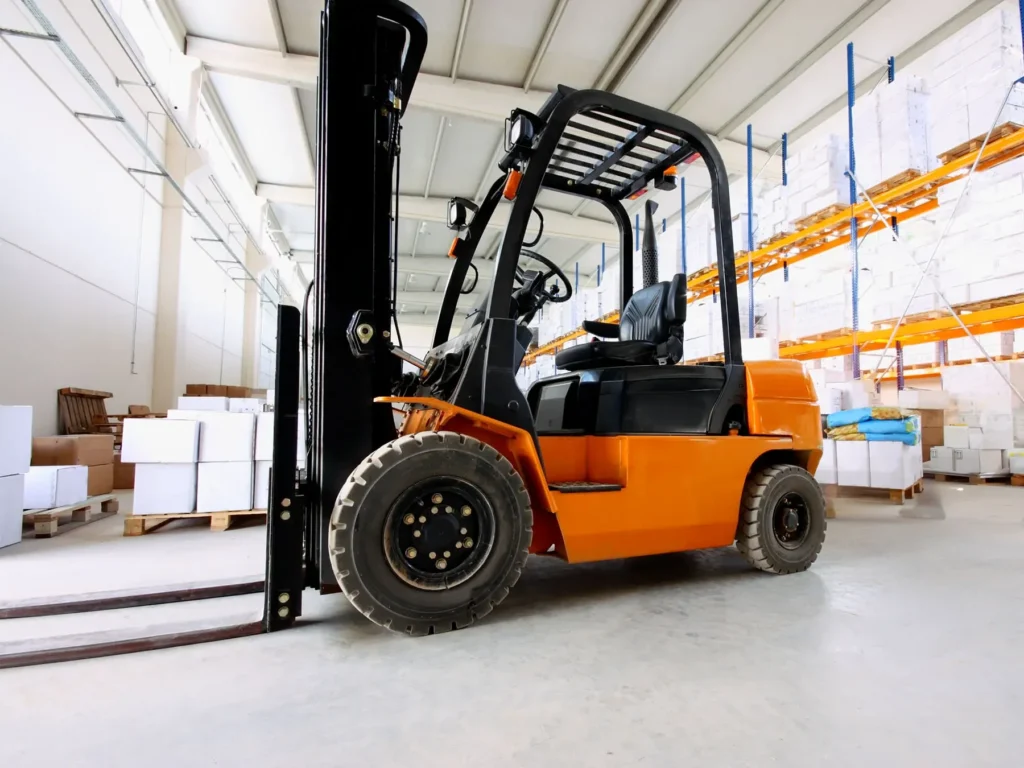
On-site forklift training (also called in-house training) is delivered at your premises by a qualified instructor who comes to you. The training takes place using your own forklifts, in your actual working environment.
Best suited for: Businesses with multiple operators to train, complex or specialist site layouts, or operators who need to be familiar with site-specific hazards.
Advantages of On-Site Training
Trained in their actual environment Your operators learn on the very ground they work on, the same racking systems, loading bays, and floor surfaces. This makes the transition from training to real work seamless and builds genuine confidence.
Cost-effective for larger teams If you have four or more operators to train, on-site training often works out cheaper per head. You’re paying for the trainer’s time, not per person, so the more operators involved, the lower the unit cost.
No downtime for travel There’s no need to arrange transport or cover for employees travelling off-site. Training happens around your schedule, minimising disruption to daily operations.
Site-specific risk awareness Trainers can incorporate your specific hazards, pedestrian routes, and internal rules into the course content, something that simply isn’t possible in a generic training centre.
Disadvantages of On-Site Training
- Requires a suitable space for theory sessions
- Could be disrupted by everyday site activity
- May not be ideal for just one or two operators (can be more expensive per head)
What Is Off-Site Forklift Training?
Off-site training takes place at a dedicated training centre. Your operators travel to a purpose-built facility equipped with training forklifts, obstacle courses, and proper classroom facilities.
Best suited for: Individual operators, new starters, or businesses without sufficient space or equipment for on-site training.
Advantages of Off-Site Training
Structured, distraction-free learning Training centres are purpose-built for learning. There are no work interruptions, no colleagues asking questions, and no production pressures, just focused, quality training.
Ideal for small numbers If you only need to train one or two people, off-site training is usually the more cost-effective option. You pay per delegate rather than for a whole day’s trainer time.
Access to a variety of equipment Some centres have multiple types of forklifts available , counterbalance, reach trucks, pallet trucks, which is useful if your operators need exposure to different machinery.
Networking and peer learning Operators train alongside people from other industries, which can spark valuable conversations and broader awareness of workplace safety practices.
Disadvantages of Off-Site Training
- Operators don’t train on your specific equipment
- Travel time and logistics need to be arranged
- Operators may need additional familiarisation when they return to site
Key Factors to Help You Decide
| Factor | On-Site | Off-Site |
|---|---|---|
| Number of operators | 4+ | 1–3 |
| Specialist equipment | Ideal | May not be available |
| Budget per head | Lower (larger groups) | Lower (smaller groups) |
| Site-specific training | Yes | No |
| Flexibility of schedule | High | Moderate |
| Learning environment | Variable | Controlled |
Don’t Forget: Both Must Meet HSE Standards
Whichever option you choose, your forklift training must comply with HSE guidelines and, where applicable, be accredited by a recognised body such as RTITB, ITSSAR, or AITT. Always check that your training provider holds the appropriate accreditation before booking.
It’s also worth remembering that forklift training isn’t a one-off requirement. Operators should receive refresher training every three to five years, or sooner if they change equipment, site, or following a near-miss incident.
Final Verdict
There’s no universal answer ,the best choice comes down to your specific circumstances. On-site training offers real-world relevance and group savings, while off-site training provides a focused environment ideal for individuals or new starters.
At Result, we offer both on-site and off-site forklift training across the UK, tailored to your team and your timeline. Get in touch today to find out which option is the best fit for your business.